For over 150 years, Bleu d’Auvergne has been crafted by master cheesemakers in Auvergne. Chef Jethro Lawrence has created these innovative pairings for enjoying this classic blue veined cheese – using fresh British produce, including wild foraged ingredients. Follow SODIAAL UK Instagram for more.
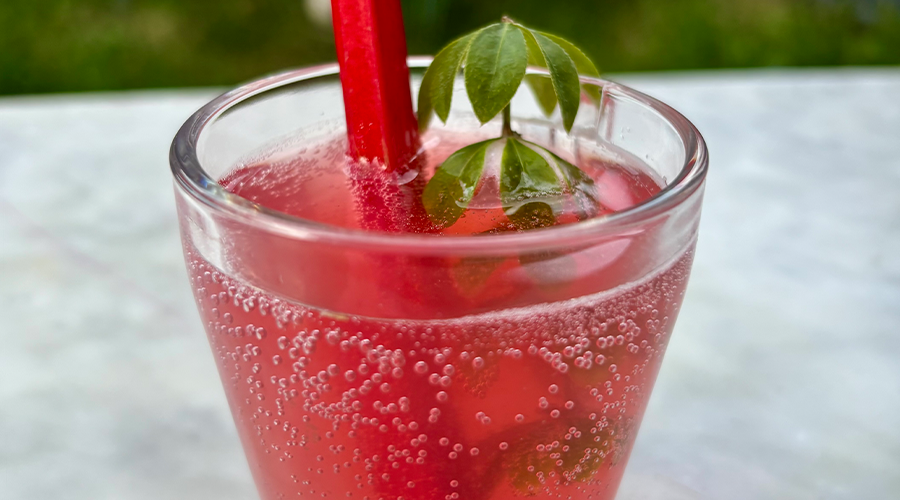
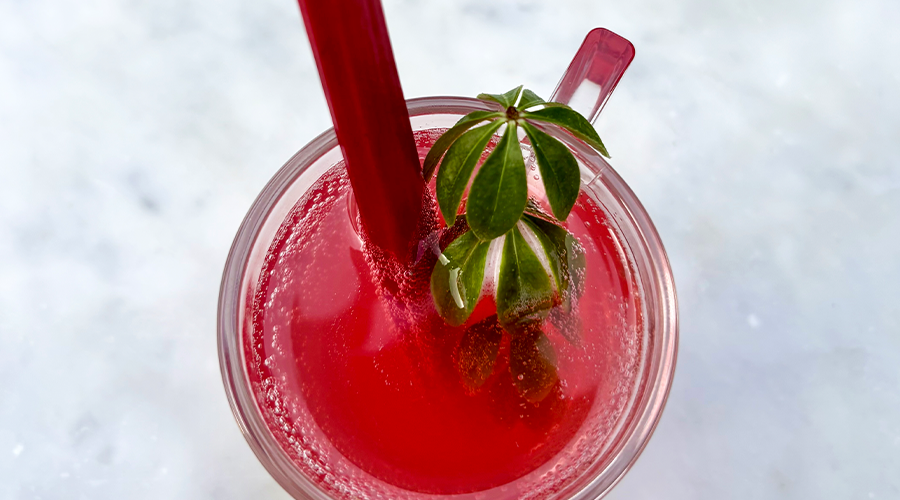
Rhubarb and Sweet Woodruff Kombucha
Ingredients
1 Kombucha Scoby (Symbiotic culture of bacteria and yeast)
200g Forced Yorkshire rhubarb
250g Unrefined sugar
20g Sweet Woodruff
500g Filtered water
Method
In a pan add your sliced rhubarb, sugar, woodruff and water and bring to the boil, cool completely to room temp.
In a sterilized jar add your Kombucha Scoby and your cooled rhubarb and woodruff liquor.
Leave for up to a week to start fermentation, taste it as it progresses, if left for too long it will get very tangy like a vinegar. Make the sure the jar is covered with a muslin cloth and elastic band to prevent any fruit flies or debris getting in.
When happy with the flavour drain ¾ of the Kombucha out from the jar, bottle up, you will find it starts to carbonate in a very short time and if left longer will start to gain alcohol volume. To halt fermentation store in the fridge and drink cold.
It’s important to leave ¼ of the kombucha with your scoby, so when you add your next batch of sweetened liquor or tea it will help kick start the next batch of kombucha
Description
Sweet woodruff has a unique vanilla-like, hay-scented aroma with a touch of almond and honey.
Forced rhubarb has a softer, more delicate acidity than outdoor-grown rhubarb, with fruity and almost berry-like tanginess.
The kombucha is slightly tart, and refreshing with a soft, floral-herbal sweetness from the sweet woodruff, balanced by the fruity acidity of rhubarb and the light effervescence of fermentation. Depending on the fermentation length, it could range from crisp and sparkling to deeper and more vinegar finish.
Why does it work with Bleu d’Auvergne cheese?
This forced rhubarb and sweet woodruff kombucha makes a brilliant pairing with Bleu d’Auvergne, creating a balance of acidity and floral sweetness. It’s a surprisingly harmonious combo with fermentation meeting fermentation.
The tangy brightness of rhubarb in the kombucha will cut through the rich, super creamy texture of Bleu d’Auvergne, making each bite feel lighter and more refreshing. The natural acidity of kombucha also helps cleanse the palate between bites. Not too dissimilar to a sparkling wine.
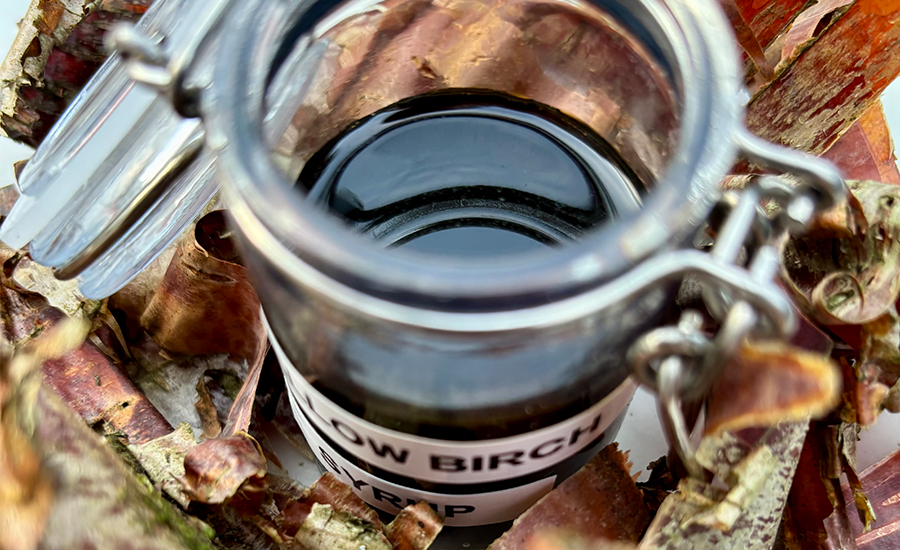
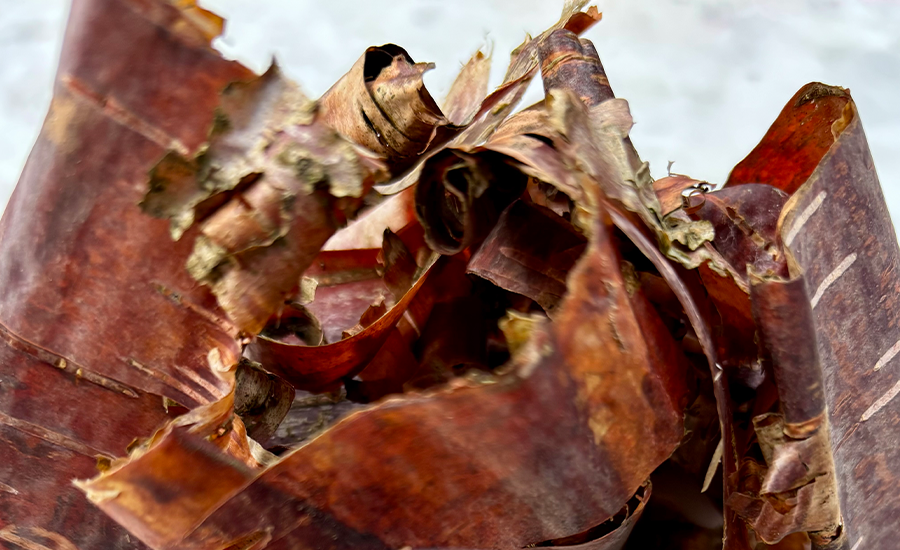
Yellow Birch syrup
Ingredient
10 Litres yellow birch sap
Equipment needed
Plastic tubing – 1 cm in diameter and 40 cm in length
A drill, any will work, manual or electric
1 cm drill bit
Container for collecting the sap – I use a 2 L water bottle
Method
After checking the tree is flowing, about 1 metre up from the base of the tree, use your drill and drill bit to drill a 1 cm width hole 8 cm into the tree – do this a slight upward angle so the sap flows down the hole.
Push your piping into this hole, making sure it’s at least 2 cm in and secure (sometimes the sap will start flowing out of the pipe straight away)
Secure your container at the base of the tree – either tie it to the tree, make sure it’s on flat ground or secure it by leaning rocks against the sides.
I usually leave it for 4-6 hours. Before taking the birch sap, I find a birch twig big enough to plug the hole to prevent any infection getting into the tree.
Also, if you’re going to be tapping regularly it’s important to leave the tree for 2 years before returning to the same tree.
To turn this Birch sap into a syrup you will want to reduce in a large pan for around 5-6 hours on low, so somewhere between a simmer and a very gentle rolling boil, you will see the liquid slowly darkening as it reduces until it reaches a dark caramelised colour and will smell like candy floss.
The reduction is 100x so from 10 Litres of sap you will end up with 100ml of delicious syrup.
Description
Yellow Birch syrup has a complex flavour that’s quite different from maple syrup. It has a rich, caramelized sweetness but with a tangy, almost molasses-like undertone and a slightly resinous, woody character. It has notes of toffee, dark fruit (like raisins or prunes), and a hint of balsamic or soy sauce-like umami, making it excellent for savoury or sweet applications.
Why does it work with Bleu d’Auvergne cheese?
Birch syrup and Bleu d’Auvergne make a fantastic pairing, as the syrup’s deep caramel and tangy, umami-rich notes complement the cheese’s creamy texture and bold, spicy blue mould.
Sweetness vs. Salty & Punchy, the slight molasses-like sweetness of birch syrup softens the intensity of Bleu d’Auvergne’s salty, tangy profile.
The balsamic-like, slightly resinous quality of birch syrup enhances the earthy, mushroomy undertones of the blue veins.